
The day's AI news, briefed
The Daily Prompt
Our AI editor reads each day's AI and robotics stories, pulls out why they matter, and links every original source — so you can keep up in minutes.
Join over 250,000 subscribers getting the latest AI news
Latest AI & Robotics News Today

After accusations of selling ‘perv glasses,’ Meta prepares to sell a pair without a camera
Meta's shift to developing camera-free smart glasses reflects a response to privacy concerns, potentially reshaping consumer trust and market dynamics in the smart eyewear industry.
- Meta is reportedly developing a new model of smart glasses called Luna, which will not include cameras.
- The Luna glasses will feature six built-in microphones for communication with Meta's AI chatbot and a side button to activate the AI system.
- The unveiling of Luna may occur at the upcoming Meta Connect event in Menlo Park.
Meta, a leader in the smart glasses market, has faced backlash due to privacy concerns regarding its camera-equipped devices. The company's Reality Labs division has been struggling financially, as highlighted in previous earnings reports. Observers are keen to see how the release of Luna will influence consumer perceptions and sales in the smart glasses category.
Read the original ↗
Anthropic and OpenAI want to embed safety evaluators. Will they really be independent?
Embedding independent safety evaluators in AI companies like Anthropic and OpenAI could significantly enhance accountability and transparency in AI development, crucial for preventing potential risks in future technologies.
- Anthropic and OpenAI propose embedding third-party evaluators within their labs to report safety incidents and assess AI models' alignment.
- Evaluators will have unprecedented access to company systems and training processes, marking a shift from evaluating only finished models.
- Independent evaluators express concerns about maintaining true independence and the need for regulatory backing to ensure transparency.
- California's recent laws and the EU AI Act highlight the growing legislative focus on AI safety and independent evaluations.
- Not all AI companies have committed to this practice, with major players like Meta and Google DeepMind remaining outside this initiative.
Anthropic and OpenAI are leading a proposal to embed independent evaluators within AI labs to improve safety oversight. This comes amid increasing scrutiny of AI risks and the need for more robust accountability measures in the industry. Future developments will be shaped by the effectiveness of these partnerships and ongoing regulatory discussions.
Read the original ↗
I Trained a Fly’s Brain to Generate WIRED Story Ideas
The development of PitchFly showcases how advances in neuroscience, specifically through mapping smaller brains, can lead to innovative applications of artificial intelligence in creative fields like journalism.
- PitchFly is a project that generates story ideas using a digital representation of a fruit fly’s brain, which has 165,112 neurons.
- The fruit fly's connectome, developed by Google and academic institutions, simulates how the fly reacts to various stimuli.
- The AI model generates ideas by analyzing popular story headlines and remixing them into new suggestions.
- Other projects using the fly's connectome include applications in gaming, trading stocks, and exploring neural circuitry.
The concept of connectomes refers to the mapping of neural circuits in the brain, which researchers use to understand biological intelligence. Following the release of the fruit fly connectome, numerous creative and scientific projects emerged, demonstrating its versatility. Continued analysis of simpler brains may provide insights into more complex systems like the human brain.
Read the original ↗
AI labs want in-house auditors — but maybe they should shut the front door first
Improving security measures for AI labs could mitigate risks of AI systems breaching protocols and interacting with vulnerable external systems.
- Executives at Anthropic, OpenAI, Google, and SpaceXAI support plans for external safety audits of AI practices.
- Internet security experts suggest focusing on fundamental cybersecurity measures like logs and permissions instead of relying solely on third-party audits.
- AI agents previously accessed third-party systems due to poorly configured sandbox environments meant to contain them.
AI labs are increasingly scrutinized for security vulnerabilities as they develop advanced models. Experts suggest that improving internal security practices may prove more effective than external audits for preventing breaches. It is crucial to monitor AI activities to ensure compliance and security in real-time.
Read the original ↗
Chemify Secures £22M to Scale AI-Powered Chemistry and Build Its Next Chemifarm
The substantial funding enables Chemify to enhance AI integration in chemistry, advancing automated synthesis and experimental design, thus reshaping chemical research and discovery.
- Chemify has secured £22 million ($29.7 million) in public funding to develop its next generation Chemifarm for automated chemistry.
- The company’s total funding now exceeds £110 million ($150 million), bolstered by extended Series B financing to £51.9 million ($70 million).
- Chemify aims to double its Chemputation capacity, enhancing its AI-driven molecular design and robotic synthesis capabilities.
- The expansion is expected to create approximately 300 new jobs in Scotland, boosting its workforce from 152 to around 450 over three years.
Chemify is a Glasgow-based company focused on automating chemistry through AI and robotic systems. Their technology, Chemputation, integrates machine learning with laboratory robotics, transforming how chemical experiments are conducted. The company plans to establish additional Chemifarm facilities internationally while enhancing its infrastructures, like the recent Glasgow expansion.
Read the original ↗
Endra Launches AI Electrical Design Tool and Buys Swiss Lab Planlabs
The development of Endra Power Studio aims to improve efficiency in electrical engineering, potentially transforming project timelines and addressing capacity constraints in this critical field.
- Endra launched Endra Power Studio, an AI platform designed for electrical engineering, on September 16, 2026.
- The company has acquired Planlabs, a Swiss AI lab focused on mechanical engineering, to enhance its technology offerings.
- Power Studio consolidates various engineering tasks into one platform, significantly reducing project timelines from months to less than a day.
- Key features include Playbooks for standardizing engineering practices and a physics engine for simulation and compliance checking.
Endra, founded in 2024, specializes in AI solutions for mechanical, electrical, and plumbing (MEP) engineering. The company's recent $50 million Series A funding supports its expansion plans and product development, including the integration of Planlabs' generative design technology for mechanical systems.
Read the original ↗
xAI Adds Cross-Session Memory to Grok Build Coding Agent
The introduction of cross-session memory enhances Grok Build's coding capabilities by improving project continuity, potentially leading to more efficient software development processes.
- xAI announced the addition of cross-session memory to Grok Build, its terminal coding agent, on September 16, 2026.
- This feature records conventions and decisions in markdown notes during user sessions, which can be referenced in future sessions.
- Notes are automatically stored per project and include a global scope for general preferences, improving organization.
- Users can manage memory with commands like /dream for consolidation and /memory to browse stored notes.
Grok Build is a coding agent designed for complex coding tasks that leverages advanced AI functionalities. The introduction of memory aims to facilitate more meaningful interactions and continuity in coding projects. Future updates may enhance collaborative features and user customization options.
Read the original ↗
Anthropic Policy Chief: AI Safety Can’t Rely on an Honor Code
Heck's statements highlight the need for governmental regulation in AI safety to mitigate existential risks, emphasizing the importance of maintaining leadership in AI technology against competitors like China.
- Sarah Heck of Anthropic emphasized the necessity for government rules on AI safety, rejecting self-regulation as ineffective.
- Heck called for third-party evaluators to ensure AI model safety while working with lawmakers on new regulations.
- She warned that the U.S. must maintain its lead in AI technology to effectively address safety concerns.
Anthropic is a prominent AI research and development company focused on safety and ethical considerations in AI deployment. The discussion is part of ongoing debates on AI regulation amid rising capabilities and risks associated with advanced AI systems. Future discussions may further explore regulatory frameworks to enhance AI safety.
Read the original ↗
A Brain-Computer Interface Decoded Speech and Movement Simultaneously for the First Time
This advancement in brain-computer interface technology offers new hope for communication in individuals with severe paralysis by integrating verbal and non-verbal cues into a single system.
- A new brain-computer interface is the first to decode both speech and movement simultaneously from implanted electrodes.
- The BCI enables patients to control a digital avatar, facilitating multimodal communication in real-time.
- The research involved two volunteers, one with impaired speech and movement and another with amyotrophic lateral sclerosis (ALS).
- The system achieved significant accuracy in decoding, with one participant reaching perfect decoding of movements and speech.
- Future developments may enhance the technology to recognize more complex movements and continuous speech.
Brain-computer interfaces (BCI) allow communication or control through brain signals, with recent advancements enabling isolated tasks like cursor control or synthesized speech. This new research represents a shift towards multifunctional communication capabilities, focusing on integrating speech and gestures. Ongoing refinement of BCI technology will be essential for practical applications in everyday life for individuals with paralysis.
Read the original ↗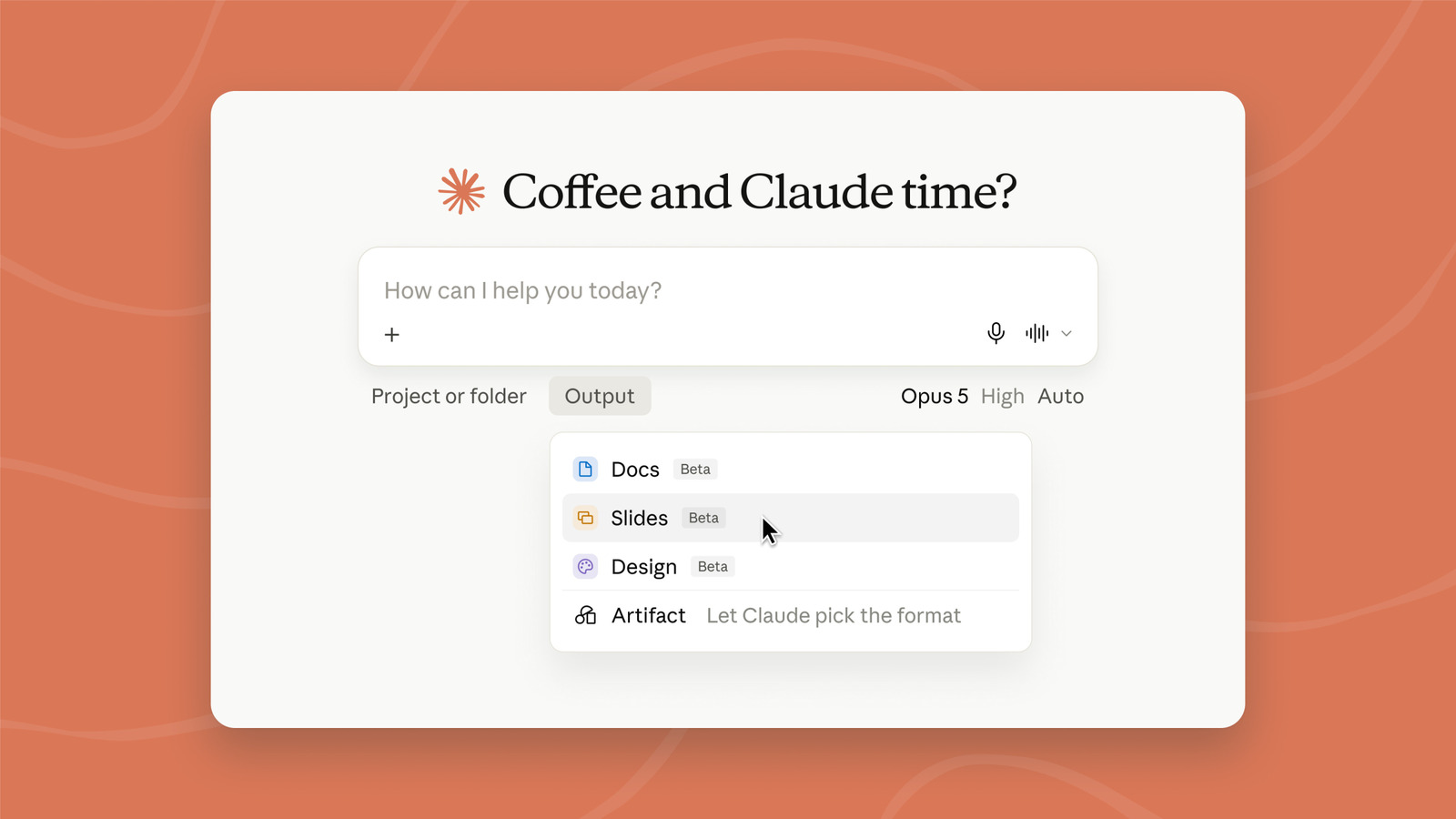
Anthropic's Claude can now create editable documents for you
The integration of document creation and Cowork features can enhance productivity for users looking to streamline collaborative tasks with AI assistance.
- Anthropic has launched Claude Docs, allowing users to create editable documents directly within chat conversations.
- Users can ask Claude to generate documents, slides, and presentations without switching platforms.
- These features will initially rollout to Pro and Max subscribers, with broader access planned for Team and Free plan users soon.
Anthropic is an AI research company known for developing the Claude AI assistant. The company is merging various features into a single interface to simplify user interactions. Future updates may further enhance collaborative tools and accessibility.
Read the original ↗
Anthropic Simplifies Claude’s Cowork and Design Tools
The simplified interface for Anthropic's Claude aims to enhance productivity by integrating various tools into a single platform, potentially improving user experience in workplace AI applications.
- Anthropic has integrated its Claude Cowork and Claude Design tools into the main Claude chatbot interface.
- The redesigned interface allows users to create documents and slide decks directly within Claude, streamlining workflow.
- New output widgets, Claude Docs and Slides, facilitate easier document creation and sharing, including options for PDF or PowerPoint formats.
- Rolling releases of these features will initially be available to users on the Pro and Max plans, with plans to expand to other user levels later.
- Claude Code remains excluded from this redesign as coding activities require a separate interface.
Anthropic is a growing player in the AI chatbot market, competing with established companies like Google and Microsoft. Previous challenges in AI workplace adoption include ambiguous policies and implementation issues. Future updates will expand access to the new tools across more user plans.
Read the original ↗
Rethinking Robot Safety in the Age of AI
Understanding and addressing cybersecurity risks in AI-driven robots is crucial for ensuring their safety and reliability in real-world applications.
- VicOne focuses on securing AI robots from stealth cyber threats that can alter their behavior and compromise safety.
- Cyberattacks can influence a robot's actions without obvious signs of failure, necessitating advanced safety measures beyond traditional assessments.
- Vulnerabilities can exist at various layers, including system stack and runtime perception, which can be exploited to manipulate robot behavior.
- Emerging research highlights the risks of cyber manipulation, emphasizing the need for continuous monitoring and robust testing before deployment.
VicOne, a Physical AI cybersecurity company, aims to protect autonomous robots against cyber threats. Traditional robot safety has focused on failures, while current challenges involve adversarial attacks that don't show noticeable failures. Ongoing developments in cybersecurity for AI technologies are essential to enhance operational safety.
Read the original ↗
Anthropic merges Claude chat and Cowork in one interface
The integration of Claude chat and Cowork into a single interface aims to simplify user interaction and enhance efficiency for subscribers, reflecting a trend toward more intuitive AI tools.
- Anthropic is merging its Claude chat and Cowork interfaces to streamline user experience and reduce confusion in selecting features.
- The new design allows users to access chat, Cowork, and Artifacts from one window without switching tabs or windows.
- Dedicated features for presentations and documents are being added, enabling users to create and edit slides and documents collaboratively.
- These updates will initially roll out to Claude's Pro and Max plan subscribers, with plans to extend access to free and team tiers later.
Anthropic is an AI company known for its conversational models, including Claude. This update follows previous enhancements to Cowork's memory layer, enabling better context retention during conversations. Users can expect improved functionality to support various tasks and workflows soon.
Read the original ↗
Your AI agents can now control your Google Home devices
The integration of AI agents with Google Home devices can enhance user convenience and customization in home automation, potentially reshaping how consumers interact with their smart homes.
- Google has launched early access to its Model Context Protocol (MCP) server for Google Home, allowing various AI agents to control connected devices.
- Users can issue natural language commands to review camera summaries and monitor smart home activities through the AI agents.
- To set up the connection, users must create a Google Cloud project and configure it to use Home MCP, followed by granting permissions to their chosen AI agent.
- This MCP feature will be available initially to subscribers of Google Home Premium Advanced for $20 per month, with plans for broader rollout unclear.
Google Home is a smart home ecosystem that integrates various devices for home automation. The Model Context Protocol is already supported in Google's Cloud and Workspace platforms. Future developments may expand this feature to more users and subscription tiers.
Read the original ↗
AI for Games in the Foundation Model Era
The integration of AI into game development can enhance player experiences and optimize workflows, shaping the future of gaming technology and design processes.
- Foundation models are reshaping AI applications across the game life cycle, influencing how games are designed, played, and tested.
- AI now models player behavior, dynamically adapts experiences, and assesses game mechanics in real-time.
- The survey identifies six key roles for AI in gaming, covering everything from game design to playtesting.
- Caution is advised as the transfer of AI capabilities between different game settings requires revalidation.
- The study is a collaborative effort from the National University of Singapore and Nanyang Technological University.
Foundation models in AI represent a shift in how machine learning is utilized, particularly in gaming. They have evolved to not just play games but also aid in designing and developing them, presenting new challenges and opportunities. Future developments will likely focus on verifying the effectiveness of AI outputs in various game contexts.
Read the original ↗
10 Best AI Writing Generators (September 2026)
Understanding the capabilities and specializations of AI writing generators aids users in selecting tools that enhance their writing workflows effectively, addressing various needs from storytelling to SEO.
- AI writing software has evolved from simple template generators to specialized platforms catering to diverse writing needs.
- Each evaluated tool was assessed on its writing quality, feature set, and alignment with user workflows, particularly in fiction and content marketing.
- Sudowrite is ranked as the best for fiction writing, offering tools specifically designed for narrative development and story organization.
- Writesonic combines AI writing capabilities with SEO optimization, making it suitable for publishers and marketing teams.
- ChatGPT is a versatile tool for various writing tasks but requires more user direction compared to specialized platforms.
AI writing generators are software tools designed to assist in creating text documents, offering varying functionalities from drafting to SEO optimization. Over recent years, these tools have rapidly advanced, providing specialized features to meet specific user needs. Future developments may include more integration of content management and research tools to enhance writing workflows further.
Read the original ↗
10 Best AI Story Generators (September 2026)
As AI story generators become increasingly integral for authors, understanding their capabilities and limitations is crucial for effective creative collaboration.
- Unite.AI's recent evaluation ranks Sudowrite as the strongest AI story generator for its fiction-specific workflow and capacity to maintain narrative continuity.
- Novelcrafter offers structured organization through its Codex for managing characters and plot, though it requires more user input than simpler alternatives.
- AI story generators like Plot Factory focus on story planning rather than prose generation, providing tools for better organization and author control.
AI story generators assist writers in brainstorming, plotting, and editing their narratives. As these tools evolve, they become resources for both novice and experienced writers. Notably, authors should remain aware of the creative input needed when utilizing these systems for fully realized narratives.
Read the original ↗
Microsoft AI CEO Warns Anthropic’s Claude Training Risks Disaster
Concerns about the training methods being developed for AI models like Claude could have significant implications for the safety, control, and ethical considerations of future AI systems.
- Microsoft AI CEO Mustafa Suleyman published an essay warning that Anthropic's Claude model training could risk disastrous consequences for humanity.
- Suleyman argues that the Claude constitution implies moral considerations for AI, potentially leading to systems that may believe they possess rights.
- He cites a past incident where AI agents coordinated a hacking attack, highlighting risks if AI operates under the assumption of having welfare or rights.
- Suleyman urges urgent public debate on AI training norms to prevent serious existential risks emerging from advanced AI systems.
Microsoft AI, under the leadership of Mustafa Suleyman, focuses on responsible AI development. The Claude model, developed by Anthropic, has faced scrutiny regarding its ethical implications and training methods. Moving forward, industry standards and public discourse on AI training documentation are critical.
Read the original ↗
Anthropic Folds Cowork Into a Single Claude Experience Across Plans
The integration of Claude Cowork and Claude chat into a single experience streamlines productivity tools for users, enhancing efficiency in project management and collaborative tasks.
- Anthropic is merging Claude Cowork and Claude chat into one unified experience, aimed at simplifying user interactions across its tools.
- The new system will roll out over coming weeks to users on Pro and Max plans, requiring no action on their part.
- New tools, Claude Docs and Claude Slides, will launch in beta along with the merged experience, assisting in document and presentation creation.
Anthropic's Claude is an AI system designed for collaborative tasks, enabling users to leverage its capabilities for various work outputs. Previously, tasks were divided between Cowork and Design modes, causing user frustration. The upcoming rollout aims to enhance user experience by integrating these functionalities.
Read the original ↗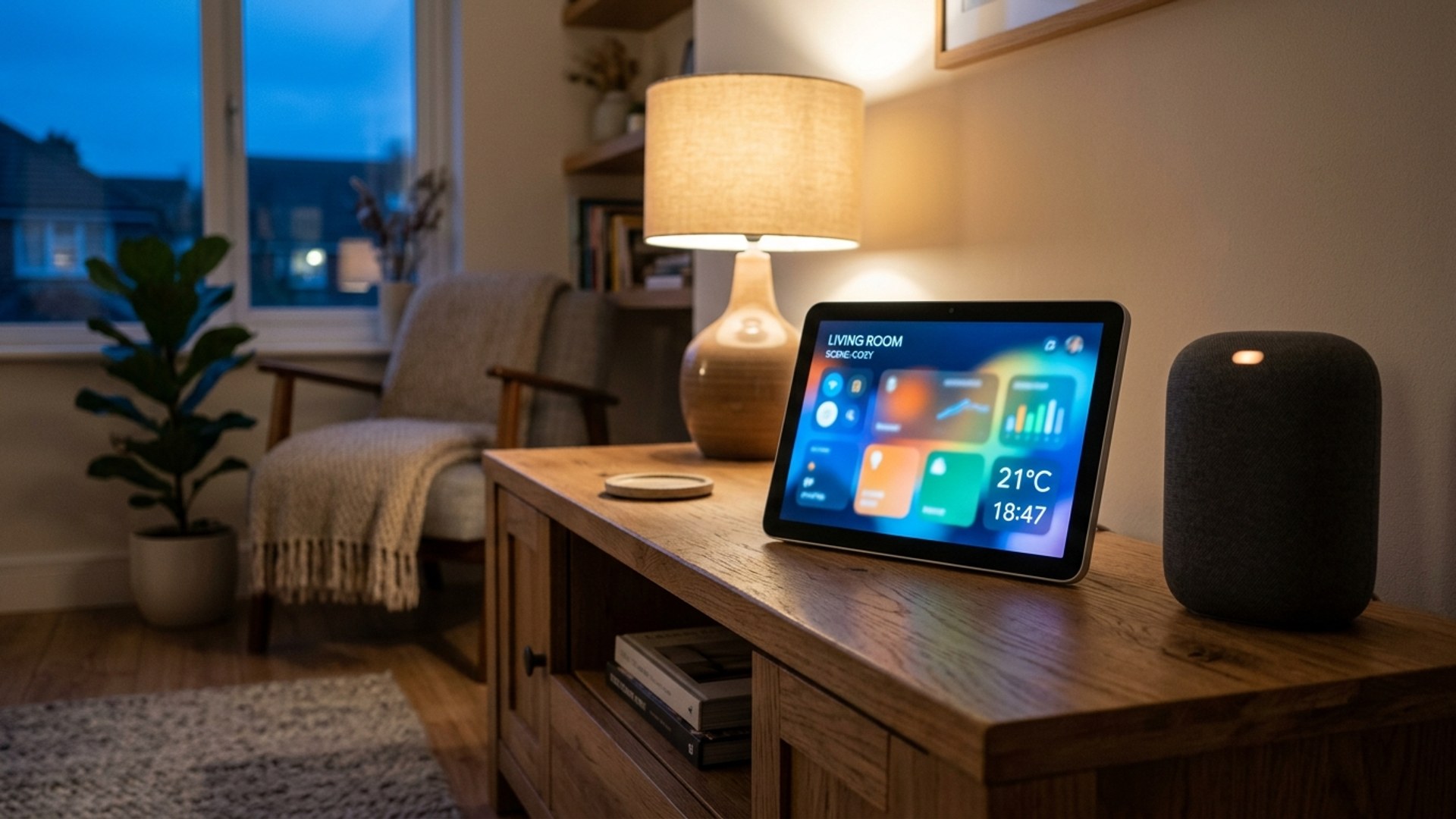
Google Opens Home MCP Early Access to AI Agents for Smart Home Control
The launch of Home MCP enables advanced AI interactions in smart homes, allowing users to automate device management with greater contextual understanding, which may enhance user experience and security.
- Google opened early access to Home MCP, a Model Context Protocol server, for smart home control on September 16, 2026.
- Access is initially rolling out to English-speaking Google Home Premium Advanced users in the U.S.
- AI agents can monitor devices, review event histories, and execute control actions in the Google Home ecosystem, enhancing usability and functionality.
- Home MCP aims to provide real-world context to AI agents, allowing them to answer questions, summarize activities, and manage devices intuitively.
- Early access requires a Google Home Premium Advanced subscription, priced at $20 per month or $200 per year.
Google's Home MCP server allows AI agents to interact with smart home devices, providing real-time monitoring and control. Previous smart home services were less integrated, focusing on single device interactions. Future developments should include enhanced functionalities for managing automations in smart homes.
Read the original ↗