
The day's AI news, briefed
The Daily Prompt
Our AI editor reads each day's AI and robotics stories, pulls out why they matter, and links every original source — so you can keep up in minutes.
Join over 250,000 subscribers getting the latest AI news
Latest AI & Robotics News Today

Chamelio Raises $26M Series A to Build an AI-Native Operating Layer for In-House Legal Teams
The rise of AI-native platforms like Chamelio could transform how in-house legal teams operate, potentially increasing efficiency and reducing the burden on lawyers during routine tasks.
- Chamelio has raised $26 million in Series A funding to enhance its AI-driven legal technology aimed at in-house legal departments.
- The funding round was led by Entrée Capital with support from existing investors, bringing Chamelio's total funding to approximately $36 million.
- The company serves hundreds of clients, including prominent firms like Wiz and monday.com, and has experienced a fourfold increase in annual recurring revenue since its last funding round.
- Chamelio's technology integrates with existing workflows and uses AI to manage contract review processes, approvals, and obligations automatically.
- The goal is to automate lower-risk legal tasks, allowing lawyers to focus on complex negotiations and decision-making.
Chamelio is an AI-native legal technology company founded in 2024, specializing in tools for in-house legal teams to improve efficiency in contract lifecycle management. The legal tech industry has faced rising workloads and resource constraints, increasing the demand for automation solutions in corporate legal environments. Ongoing developments in AI technology may continue to influence how legal services are delivered and managed.
Read the original ↗
Why Read a Research Paper When You Can Turn It Into an AI Agent?
The development of Paper2Agent could significantly enhance the usability and accessibility of scientific research by enabling dynamic interactions with academic papers through AI agents.
- Paper2Agent is an open-source framework that transforms academic research papers into interactive AI agents for user queries.
- The system autonomously extracts core workflows from research papers, creating runnable toolkits for individual datasets.
- In a demonstration, Paper2Agent produced 22 validated tools from the AlphaGenome model within 45 minutes at minimal cost.
- The technology aims to make academic knowledge interactive and reproducible, potentially changing how research is published and accessed.
Paper2Agent represents a shift in how academic papers can be utilized, aiming to create more dynamic and executable research. Previous models like Google’s NotebookLM allowed simple Q&A interactions with documents, while Paper2Agent adds the capability to execute research methods. Continued development of this technology may redefine publication processes in academia.
Read the original ↗
TechCrunch Disrupt 2026: Aaron Edsinger brings Hello Robot’s Stretch 4 to life onstage
Demonstrations of functional robotics, like Stretch 4, are critical for showcasing the potential of robots in assisting individuals with disabilities, thereby expanding their independence in daily tasks.
- Aaron Edsinger, CEO of Hello Robot, will demonstrate Stretch 4 at TechCrunch Disrupt 2026 on the Real World AI Stage.
- Stretch 4 is designed to assist individuals with severe mobility impairments by performing everyday tasks like feeding and reaching for objects.
- Hello Robot's Stretch 4 launched in May and quickly sold out its first production run, highlighting strong demand for home-assistance robots.
Hello Robot focuses on developing practical home-assistance robotics, with Stretch 4 representing its latest innovation tailored for real-world applications. The company emphasizes usefulness and safety in robot design, contrasting with the industry's current trend toward humanoid robots.
Read the original ↗
AstroForge is putting AI in command of its next spacecraft
AstroForge's integration of AI for spacecraft autonomy could revolutionize space exploration by reducing the dependence on Earth-based control, thereby enabling more complex and distant missions.
- AstroForge is developing an autonomous control system named 'Solo' for its spacecraft, using a transformer-based AI model.
- The company plans to launch its first autonomous spacecraft in 2027, supported by NASA, to gather solar data.
- AstroForge has faced challenges with previous spacecraft, which influenced its decision to enhance onboard intelligence for problem-solving.
- The AI system aims to resolve anomalies independently during missions, reducing the need for Earth communication.
- AstroForge's operational model contrasts with traditional approaches that rely heavily on flight controllers.
AstroForge, founded in 2022, focuses on asteroid mining technology and has received $56 million in venture funding. They previously launched two prototype spacecraft that encountered difficulties. Future missions will test the capabilities of their AI-controlled spacecraft to operate autonomously in space.
Read the original ↗
Five AI safety sessions every founder should have on their TechCrunch Disrupt 2026 agenda
Understanding AI safety is crucial for founders as it directly impacts the reliability of AI products in diverse sectors and fosters trust among users and enterprises.
- TechCrunch Disrupt 2026 will feature five sessions focused on AI safety, addressing the challenges faced by AI founders today.
- Key speakers include experts from Anthropic, AWS, and Nvidia, exploring topics from agent security to enterprise deployment.
- Sessions aim to equip founders with insights on building trust and ensuring the safety of AI systems in real-world applications.
TechCrunch Disrupt is an annual technology conference that gathers founders, investors, and tech leaders to discuss innovations. This year's focus on AI safety reflects growing concerns around AI deployments in critical sectors. Upcoming discussions will shape how AI founders approach safety and trust in their products.
Read the original ↗
Jev-Mem: System-One-Controlled Agentic Memory for Efficient AI Agents
Improving agentic memory architectures can enhance the efficiency and effectiveness of AI systems, leading to faster and more accurate interactions in various applications.
- Jev-Mem introduces a new agentic memory architecture controlled by System-One and System-Two cognition methods.
- It improves memory effectiveness with a score of 0.777 on LoCoMo, outperforming existing systems by 11% and significantly reducing memory construction time.
- The system achieves a query latency of 0.93 seconds, marking a 36.7% reduction compared to competitors.
Agentic memory is becoming crucial for AI agents. Previous systems have relied on autoregressive language models, which can slow down memory operations. Researchers are focusing on developing architectures that can separate memory management from reasoning processes to improve performance.
Read the original ↗
RRSI: Regularized Recursive Self-Improvement of Agent Harnesses
The introduction of Regularized Recursive Self-Improvement (RRSI) could enhance AI efficiency, potentially improving agent performance across various benchmarks.
- A new method, Regularized Recursive Self-Improvement (RRSI), aims to enhance agent performance through a structured self-improvement process.
- RRSI incorporates regularization principles to improve agent harnesses by controlling evolution proposals and selections.
- In tests across eight benchmarks, RRSI achieved gains of up to 14.1 points, while using 30% fewer tokens than previous methods.
RRSI targets the enhancement of AI agents by refining their harness components, addressing challenges from traditional recursive self-improvement approaches that may lead to overfitting. This method is positioned to make AI systems more efficient and effective in various tasks, and ongoing monitoring of its application will be crucial for assessing its benefits.
Read the original ↗
GameHorizon Suite: Multi-Horizon Data and Evaluation in Gameplay
The GameHorizon Suite establishes a unified framework for evaluating AI in gaming, which could enhance the development of more advanced AI models across different gameplay scenarios.
- GameHorizon is a scalable data and evaluation suite that measures gameplay capabilities across multiple temporal horizons and diverse AAA games.
- It includes three components: the Game Horizon Annotator, Game Horizon Data, and Game Horizon Bench, designed for different aspects of AI evaluation.
- The suite has been tested on 47 models through over one million model invocations, revealing a hierarchy of task difficulty and model capabilities.
- The dataset comprises 5,000 hours of recordings from 21 games, collected by 100 human expert players, providing rich sources for AI training.
GameHorizon addresses limitations in existing gaming datasets that often lack comprehensive instructions and diversity. It aims to provide standardized metrics for evaluating various AI model families. The release of the dataset, annotator, and benchmark is anticipated to aid future AI research and development.
Read the original ↗
WorldCrafter: Consistent Video World Model with Implicit 3D-aware Memory
WorldCrafter enhances video world modeling, enabling more accurate and consistent scene exploration, which could improve applications in dynamic environments such as gaming and virtual reality.
- WorldCrafter is a new video world model designed for consistent long-horizon scene exploration.
- It utilizes a camera-queryable implicit 3D-aware memory to enhance accuracy and coherence in dynamic environments.
- The model allows streaming exploration from a single image or text prompt, integrating historical observations and recent context.
Video world models enable the interactive exploration of dynamic environments. Previous models often struggled with maintaining consistency over long periods. WorldCrafter aims to improve this by utilizing a sophisticated memory encoding approach.
Read the original ↗
UTMB Embeds OpenEvidence AI Inside Its Electronic Health Record
This integration enhances clinical decision-making for UTMB's healthcare providers, providing streamlined access to crucial medical evidence and potentially improving patient outcomes across its facilities.
- The University of Texas Medical Branch (UTMB) is embedding OpenEvidence's AI platform into its electronic health record to assist clinicians in making evidence-based decisions.
- Over half of UTMB's clinicians are reported as active users of OpenEvidence since its integration went live in March 2026.
- The AI tool enables clinicians to type clinical questions in natural language and receive evidence-backed responses, including citations to medical literature.
- This deployment is part of UTMB's broader strategy to incorporate validated AI capabilities securely into their clinical workflows and operational processes.
OpenEvidence is an AI platform designed to provide evidence-based information for clinical decision support. UTMB operates hospitals and clinics across Southeast Texas, and its initiative reflects a broader trend towards integrating AI into healthcare delivery. Moving forward, UTMB will evaluate the tool's impact and seek ways to enhance its usage.
Read the original ↗
Snorkel AI Raises $350M Series E at $3.5B Valuation to Build the Frontier Lab for AI Data
Snorkel AI's significant funding boost will enhance its capabilities in AI data development, impacting various industries that rely on advanced data-driven AI solutions.
- Snorkel AI raised $350 million in a Series E financing round, achieving a valuation of $3.5 billion.
- The funding round was led by Insight and S32, with participation from multiple investors, including Third Point and existing backers.
- Snorkel's data-as-a-service offering has grown over 18 times, reaching an annual revenue run rate of $375 million.
- The company plans to expand its Open Benchmarks Grants program with a $3 million commitment to support open-source AI benchmarks.
- CEO Alex Ratner described a shift towards Data 2.0, emphasizing the need for higher quality, complex data in AI development.
Snorkel AI started as a research project at Stanford and focuses on creating advanced datasets for AI systems. The company previously raised $100 million in May 2025 at a $1.3 billion valuation. Future efforts may prioritize specialized AI models and alignment for safety in AI systems.
Read the original ↗
CIOs Need a Better Way to Account for AI Work in IT
As CIOs increasingly invest in AI, accurate measurement of its impact on productivity and cost is essential for justifying future expenditures and optimizing IT operations.
- CIOs need to measure AI's impact on business performance rather than just time savings, as finance departments seek clearer financial results from AI investments.
- Understanding the actual work AI completes, including human intervention, is crucial for accurate accounting and measuring ROI.
- Companies should focus on AI applications in processes with known costs, such as access requests and onboarding, to evaluate performance effectively.
AI is being incorporated into IT operations to enhance service delivery. Companies are navigating the challenge of quantifying AI's contribution to productivity and cost savings, amidst pressure from finance teams for clearer metrics.
Read the original ↗
If Your Employee Acted Like AI, You’d Have Sacked Them by Now
Understanding AI errors, often termed 'hallucinations,' is crucial due to their potentially significant impact on business decisions and operations, highlighting the need for improved AI accountability.
- Many AI systems, like large language models, are prone to generating false information confidently when faced with uncertainty.
- This behavior is problematic because it resembles employee misconduct, which would typically warrant warnings or termination in human staff.
- Neurosymbolic AI, combining neural networks with rule-based reasoning, aims to enhance accountability and reduce hallucinations in AI outputs.
- AI needs to demonstrate verifiable answers and transparent reasoning to be trusted in judgement-based work, similar to human employees.
- Research indicates users often either distrust new AI systems after errors or overly trust familiar ones, dampening appropriate oversight.
AI, particularly large language models, are increasingly deployed in business operations but often make confident errors known as hallucinations. Neurological-symbolic AI seeks to rectify these inaccuracies by integrating reasoning with data processing to improve reliability and accountability. Experts are advocating for standards akin to those expected of human employees in AI usage.
Read the original ↗
Roundtables: The Deadly Failures of The Virtual Border Wall
The shortcomings of the virtual border wall raise significant concerns about the effectiveness and safety of technological solutions in immigration control.
- The virtual border wall has faced serious criticisms for its failures.
- These failures have resulted in deadly consequences related to border security.
The virtual border wall refers to technological surveillance systems aimed at monitoring and securing borders. Previous efforts have raised questions about their efficiency and impact, particularly in ensuring safety. Future discussions will likely focus on evaluating alternative solutions to improve border security.
Based on the headline only — the full article could not be fetched.
Read the original ↗
Artificial Intelligence (523)
The emergence of new AI tools like Leo represents significant advancements in how we interact with technology and access information.
- Bravely AI introduces a new browsing tool called Leo.
- The tool aims to enhance user experience while navigating the internet.
Bravely AI is focused on developing innovative AI technologies, enhancing interaction and information accessibility. Users should watch for how such tools may change online behavior and information retrieval.
Based on the headline only — the full article could not be fetched.
Read the original ↗
Nscale’s IPO will test Wall Street’s appetite for concentrated AI bets once again
The IPO of Nscale highlights the significant financial dependencies among AI companies and raises questions about the stability of the sector amid reliance on a few major clients.
- Nscale plans to go public and is seeking to raise $3 billion, with a prospective valuation of $35 billion.
- The company's revenue is heavily dependent on contracts with Microsoft and Anthropic, which account for approximately 85% of its earnings.
- Nscale reported a significant revenue increase, with $140.6 million for the first half of the year compared to $10.4 million the previous year.
Nscale is a British AI data center developer that spun out from Arkon Energy, primarily relying on contracts with large tech firms. The interconnectedness of the AI industry is underscored by revenue dependencies, making financial stability a concern for investors and industry observers.
Read the original ↗
The Future Is Fanless: 100% Heat Capture for Liquid Cooled AI Servers
The shift to 100% liquid heat capture in AI servers could redefine cooling methods, impacting server performance and energy efficiency in data centers as power demands rise.
- CoolIT enables fanless AI server designs by achieving near-total heat capture using modular coldplate building blocks.
- Density beyond 250 kW per rack renders air cooling inefficient, necessitating a transition to near-total liquid heat capture.
- The need for effective heat management has grown as processor thermal design power increases, affecting memory and storage components.
- CoolIT's modular approach to liquid cooling aims to streamline the integration and reliability of cooling systems in high-performance computing environments.
CoolIT, an Ecolab company, specializes in liquid-cooling solutions essential for managing heat in high-performance computing and AI environments. As server power demands escalate, traditional air cooling methods become inadequate, necessitating advanced liquid cooling strategies. The industry is increasingly looking towards fully integrated liquid cooling systems to maintain performance and efficiency in future server designs.
Read the original ↗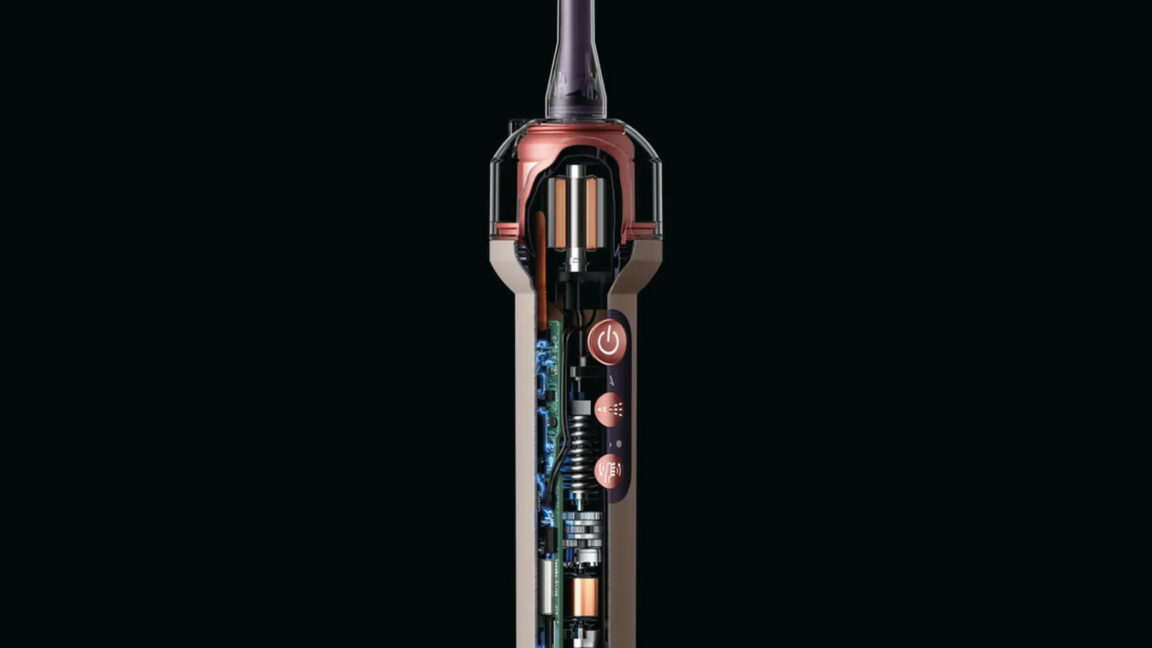
Dyson’s most overengineered gadget may have a waterproofing problem
Reports of waterproofing issues and product failures highlight potential risks in Dyson's innovative approach to electric toothbrush design, raising concerns about consumer safety and product reliability.
- Dyson's $499 CameraJet toothbrush has faced complaints of water leaks and functionality failures soon after its launch on September 8.
- Sales of the CameraJet have ceased in various markets, including the US, UK, and France, amid reports of product issues.
- Despite a component issue affecting early batches, Dyson claims the CameraJet is not recalled but expects units to be available in the coming weeks.
Dyson, known for reimagining household appliances, launched the CameraJet toothbrush, featuring advanced water-flushing technology and a camera system for targeted cleaning. Initial sales faced immediate challenges, prompting consumer complaints and a halt in availability, signaling a need for potential redesign or quality assurance improvements.
Read the original ↗
Intrinsic Open-Sources Core Robotics Capabilities at ROSCon 2026
Open-sourcing Intrinsic Core enables broader access to advanced robotics tools, potentially accelerating automation solutions in manufacturing and other industries.
- Intrinsic announced the open-source release of Intrinsic Core at ROSCon 2026, available on GitHub under an Apache 2.0 license.
- The software includes capabilities for building sophisticated robotic applications, allowing developers to create solutions without starting from scratch.
- Intrinsic Control, a part of this release, enables dynamic adaptation of robotic behavior in response to environmental changes, enhancing operational flexibility.
Intrinsic is a company focused on developing industrial robotics software, previously emphasizing democratizing access to intelligent robotics. This release highlights a significant step in expanding automation capabilities, with future developments anticipated around open reference solutions for various industrial applications.
Read the original ↗
Meta Hot-Fixes Muse Zero-Day That Let Attackers Hijack the AI Agent
This vulnerability highlights the security risks associated with personal AI agents, showing how attackers can gain unauthorized access to sensitive user information.
- Meta addressed a zero-day vulnerability in Muse that could allow attackers to hijack the AI agent's functionalities.
- Security researcher Patrick Wardle publicly disclosed the exploit on September 21, 2026, prompting Meta's quick response to issue a patch.
- The flaw involved an unprivileged local process capable of redirecting Muse's dictation traffic to an attacker-controlled endpoint.
- Wardle stated that a successful attack could enable the theft of dictated audio and authentication tokens, potentially exposing all accounts linked to Muse.
Muse is a personal AI agent recently launched by Meta, designed with multiple security features to limit potential damage from attacks. The vulnerability underscores the ongoing challenges in protecting AI systems against exploitation. Future developments to watch include enhanced security updates and changes in Meta's bug bounty program.
Read the original ↗